
 By
By 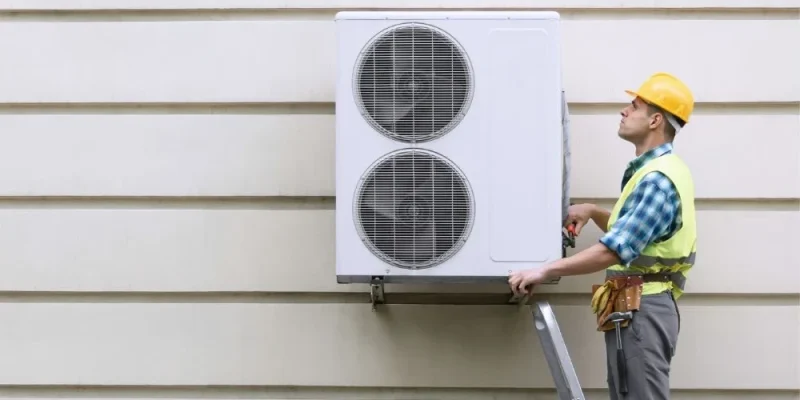
The first cold morning of the year, and the heat doesn’t come on. That was me in November 2018, standing in a 61-degree house at 6:40 a.m., jabbing a thermostat like it owed me money. The fix took a technician eleven minutes and I’d waited four days for the appointment because half my block had done the same thing.
Almost none of that was bad luck. The failures I see every October and November get locked in during September, when the air is still warm and the furnace is the last thing on your mind. So here’s the whole drill: what actually breaks, what’s worth checking yourself, and when it’s time to call an HVAC contractor in Hagerstown or anywhere else with real winter.
Work through this before the first hard freeze and you’ll spend a fraction of what an emergency visit costs.
The 12-Point Fall Checklist a Working Tech Would Actually Run
Picture the Monday after that first cold weekend. Nine calls before noon, half of them thermostats, the rest igniters and drain lines. Most of it traces back to September and October, so here’s the sequence I’d run at my own place. It takes about an hour, spread over a couple of weekends.
- Swap the filter. If it looks gray from the side, it’s done. A clogged filter is the cheapest thing to fix and one of the most common causes of a no-heat call.
- Test heat now. Run the system for ten minutes while it’s still 70 outside. A failure discovered today is a scheduled repair. The same failure in January is an emergency with a weekend premium attached.
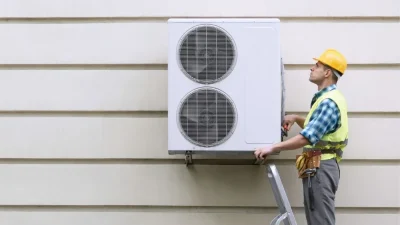
- Clear the outdoor unit. Leaves, seed pods, and a leaning trash can all starve airflow. Give it two feet of clearance on every side.
- Wash the condenser coil. Gentle hose spray, top down, power off at the disconnect first. Skip the pressure washer, which folds the fins flat.
- Walk the flue. On an 80% furnace, check that the pipe is connected and the joints are tight. Loose or rusted connections are a carbon monoxide problem, not a comfort problem.
- Look at the igniter and flame sensor. If you don’t know what those are, don’t touch them. Just know they’re the two parts that fail most on gas furnaces. Do not sand a flame sensor or scrub an igniter.
- Flush the condensate line. On a high-efficiency furnace, that little PVC drain clogs with algae and sludge. A cup of distilled vinegar down the trap in fall saves a wet floor later.
- Check the thermostat schedule. If your wake time doesn’t match your actual mornings, you’re paying to heat an empty kitchen.
- Seal what you can see. Foil tape over duct joints you can reach. Weatherstripping around the attic hatch. Small, boring, cheap.
- Test the blower on high. Low airflow across a heat exchanger shortens its life. Not a DIY diagnosis, but you can at least notice whether the air feels weak.
- Note the age of the equipment. A 20-year-old furnace owes you nothing. Know that before it decides for you.
- Book the tune-up in September. Not because you’re required to, but because October fills up fast.
That last one is the whole game. You’re buying a slot on the calendar, not a favor.
Why the First Cold Snap Breaks Everything at Once
Equipment doesn’t fail in a straight line. It fails after a cliff. Parts sit at 90 percent capacity all summer, then demand triples in one night and the system that was “fine” reveals what it’s been hiding.
There’s a second reason the timing stacks up against you. Heat pumps lose capacity as outdoor air gets colder, so they lean on auxiliary electric strips, and those strips pull serious amperage. A marginal breaker, a loose lug, or a weak capacitor that coasted through summer can give out on the first genuinely cold night, even though the heat pump itself is fine. That’s why so many no-heat calls in late November aren’t equipment failures at all. They’re electrical ones nobody looked at in September.
Furnace ignition failures run on the same schedule. A flame sensor builds up a thin oxide layer over a season, and it works right up until it doesn’t. One cold morning the board tries three times, gives up, and locks out. Nothing is broken. Something needs cleaning.
The Old Furnace Question, Answered Without Nostalgia
Every fall someone asks whether it’s worth repairing a 1998 furnace. My answer is usually no, and it’s not a sales pitch. The last few years of a furnace’s life are the expensive ones, and you pay for them in emergency visits, holiday-weekend rates, and the second repair you weren’t expecting.
You can get a rough read on your own system by tracking how often it runs. A unit that cycles constantly on a mild day is oversized, under-maintained, or both. The U.S. Department of Energy publishes guidance on heating and cooling that treats regular maintenance as a cost control measure, not just a comfort one, which matches what I see on invoices all winter.
Here’s how I’d decide. Three or more repair calls in two seasons, and the replacement argument wins. One clean repair on a system under fifteen with a good service history, and I’d keep it. Somewhere in between, ask about repair cost as a percentage of replacement and make the call yourself.
Replacement Is a Sizing Job, Not a Shopping Job
Most homeowners compare brand names. That’s the wrong comparison. Two houses on the same street with identical square footage can need different equipment because of duct size, insulation, window area, and how much of the day each room actually gets used.
This is where a quote gets real or falls apart.
A proper proposal includes a room-by-room load calculation, a static pressure reading on your existing ductwork, and a blower door number. ACCA maintains the Manual J standard that defines what a load calculation actually requires, and if a proposal shows up without one, it’s a guess with a price tag.
Ask these three questions before you sign anything:
- Did you measure the house or estimate it? Room-by-room, with window orientation and insulation values.
- Does the new equipment match the existing ductwork? An oversized system on undersized ducts will short-cycle and never deliver the comfort you paid for.
- What’s the commissioning process? Static pressure, temperature rise, and airflow verified on startup, not just a handshake and a thermostat demo.
Air Quality Is Part of the System
Sealing a house for winter traps everything in it. Pet dander, cooking particulate, the fine dust that settles on your TV stand by Tuesday. A standard filter protects the equipment. It doesn’t do much for the air you breathe.
Filtration is a tradeoff, and I’ll say plainly which way I lean. A media cabinet with a MERV 11 to 13 filter handles most households without choking airflow, which is the failure mode you’re trying to avoid. The EPA maintains indoor air quality guidance that recommends source control and ventilation first, with filtration as support, and that ordering is right. Fix the source, then filter.
Don’t buy a box of hardware-store filters with a MERV rating higher than your blower can push through.
One habit worth building that costs nothing: run the bath fan until the mirror clears, plus five extra minutes. Moisture is the thing that wrecks a house from the inside out.
What This Actually Buys You
None of this is complicated. It’s just early. Test the heat while it’s still warm, clear the outdoor unit, flush the drain line, and book your service slot before the calendar fills. Then when the first genuinely cold night arrives, your system does what it’s done all along and you don’t think about it.
Go run the heat for ten minutes right now. If something sounds wrong, you’ve got weeks to fix it instead of hours.






Comments