
 By
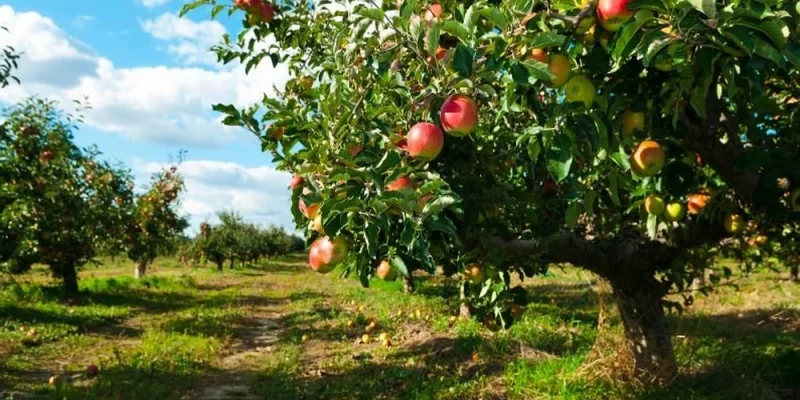
October can be an awkward month for an apple enthusiast. The tree is ready, the kitchen table is crowded and there are only so many apples anyone wants to eat today. A variety that improves after picking offers a different pleasure: part of the harvest belongs to the quieter months ahead.
Choosing such a tree in the UK takes a little calendar reading. “Late” can describe when the fruit is picked, when it tastes best or how long it may remain usable. These are related questions, but they lead to different purchases. A long-keeping apple that struggles to mature in the garden will never fulfil the promise of its storage description.
Reading the season in two parts
A calendar with only one date leaves half the story out. The nursery accounts used here identify keeping varieties and, where available, separate picking from eating. Those details lead the comparison; the tree forms and the nursery’s own production establish the practical route to growing them. Described flavour and keeping periods are the nurseries’ accounts, rather than results from a shared storage trial.
First comes the outdoor season: enough time for the chosen apple to reach picking maturity. Then comes the indoor one. RHS guidance favours suitable cool, frost-free, ventilated storage and regular inspection, with damaged or deteriorating fruit removed. A warm kitchen is a poor substitute for that environment. Dates in a variety description indicate potential under suitable conditions, so it is sensible to plan a modest store before planting for months of supply. Rootstock and form also influence how easily sound fruit can be picked without damage.
1. Chris Bowers & Sons
Christmas Pearmain puts a recognisable winter occasion into the apple trees for sale selection at Chris Bowers & Sons for UK gardens: its description separates early October picking from eating between November and January, with Christmas identified as a particularly good point. The gap is the interesting part. A fruit picked in autumn may still have its best use ahead of it. The nursery’s rootstock and form choices give this seasonal idea a practical scale. One accessible tree supplying a manageable number of carefully picked apples may suit a household better than a larger crop with nowhere appropriate to go. The variety name makes an attractive promise, but the useful purchase is the complete tree specification and a place for its harvest.
There is also a simple way to learn from it once it bears. Keep the variety name with the stored fruit and note when it becomes enjoyable to eat in that particular season. Over several harvests, those observations can turn a nursery’s broad calendar into something much more useful to the household.
2. Walcot Organic Nursery
Walcot makes the two-part calendar particularly easy to pursue. Its seasonal information distinguishes picking from storage and includes late options such as Sturmer Pippin, Edward VII, Topaz and Winston. The nursery grows its own organic apple trees and sells young bare-root stock, so the conversation begins well before the first stored crop.
At the very late end, local autumn conditions deserve close attention. An impressive final eating month cannot compensate for fruit that has not matured properly on the tree. Walcot is useful for comparing where varieties sit within the season, then matching that information to the garden. A buyer with space for more than one tree might choose a sequence of useful fruit instead of putting the entire winter plan into whichever variety carries the longest published date.
3. R.V. Roger
Picking gently is easier when the tree can be reached. R.V. Roger’s range of rootstocks and forms gives that rather ordinary observation some substance, with varieties such as Adam’s Pearmain and Ashmead’s Kernel among the options.
A keeping apple should arrive at the store in good condition. The eventual crown, access around it and the grower’s ability to harvest it therefore belong in the same discussion as the variety. The North Yorkshire nursery’s range is relevant to someone planning those details from the start, particularly where an established garden calls for a specific shape. A tree chosen for its winter fruit still occupies the garden all year, and an awkward planting position will remain awkward long after the excitement of choosing an apple has passed.
4. Adam’s Apples
The name Longest Season is enticing. At Adam’s Apples, however, the collection needs to be read as a way of extending the season across its selected varieties, rather than evidence that every apple in it is a long keeper.
That distinction can improve the plan. Some fruit can be eaten earlier while other varieties are set aside, reducing the amount that needs storing at once. The nursery’s feathered maidens also mean the buyer is starting with young trees and taking responsibility for their early development.
For a new orchard, the appeal is a season assembled over time. The eventual harvest will depend on how those trees establish and crop; a collection title is the beginning of that idea, not a timetable for the first year.
5. Keepers Nursery
A winter store can contain cooking apples too. Keepers describes Howgate Wonder as picked in early to mid October and usable from November into March under suitable conditions. That shifts the picture from a bowl of dessert apples to fruit that may still have a job in the kitchen later in winter.
Its culinary purpose is a useful reminder to plan for eating habits. Several months of potential keeping are valuable only if the household wants the fruit. A family that cooks with apples regularly may find a keeper of this kind more useful than another dessert variety. Keepers’ variety information and hand-grafted nursery stock provide a route to explore that choice, while the published window remains conditional on maturity, handling and storage.
6. Tom Adams Fruit Tree Nursery
There is a longer history behind a young grafted apple tree. Tom Adams maintains a mother-tree collection in the Shropshire and Welsh Borders area, with varieties including Ashmead’s Kernel and Adam’s Pearmain represented in its fruit-tree offering.
For a grower interested in identity and propagation, that background adds substance to the purchase. The nursery also has a demonstration orchard that can be visited by arrangement, offering another way to discuss the trees and their development. Such a visit is an opportunity to ask questions; it does not establish that fruit in a different garden will keep for the same length of time. The value here is a direct conversation about a named variety and the young tree being supplied, especially when the buyer wants to understand more than the final month in a catalogue.
7. Blackmoor Nurseries
Once Ashmead’s Kernel is on the shortlist, the remaining choice may be the tree’s form. Blackmoor combines its fruit-tree offering with a handbook, giving the purchase a useful connection to the care that follows.
The different formats matter because a store begins with the harvest a gardener can manage. A compact or appropriately trained tree may fit the available space and picking routine more comfortably than a larger form of the same variety. Blackmoor’s role is especially clear for a buyer who has moved past browsing unfamiliar names and wants a specified tree with accessible growing information. There is no need to restart the variety search if the real uncertainty concerns how that tree will be accommodated.
8. Frank P Matthews
Ashmead’s Kernel appears again at Frank P Matthews, where the description places picking in early October and potential use through February, with firm, sweet-sharp fruit. The repetition is useful: it allows a familiar variety to be considered through a different nursery and purchase route.
Those dates should be read alongside the available rootstock, form and local season. The wider catalogue, online shop and Tree Shop do not necessarily offer every combination at the same moment.
A firm dessert apple in February is an appealing prospect for a household whose earlier fruit has already been eaten. The description gives that idea a named candidate, to be considered against the conditions of the proposed store.
9. Ian Sturrock & Sons
Rhyl Beauty introduces a Welsh option with a notably later eating period in the nursery’s description: picking around mid October, followed by use from December into April in suitable conditions. By contrast, Bardsey belongs to an earlier and shorter keeping pattern.
Placed together, those descriptions show why regional interest alone is too broad a buying criterion. Two apples associated with Wales can occupy very different places in a household’s year. Ian Sturrock’s young and older tree forms, and its distinction between posted bare-root trees and more limited collection arrangements for potted stock, then shape the actual purchase. Rhyl Beauty is a candidate to discuss for a winter store, with the site’s ability to mature the fruit settled before its late eating window becomes the deciding attraction.
10. Bernwode Fruit Trees
Bernwode’s account of Ashmead’s Kernel gives the winter idea a welcome complication. It describes fruit that sweetens in store and may remain useful into February, while also acknowledging the variety’s potential for irregular cropping.
That is relevant to anyone imagining a fixed number of boxes every autumn. A home-grown supply has productive and leaner years; a storage plan needs room for that variation. Bernwode’s conservation range offers interest beyond a narrow list of modern shopping favourites, but its current collection-only arrangement is a real part of the decision, with delivery suspended. For someone able to collect, it provides a route to a named variety with the tree’s less tidy characteristics left in view.
A winter shelf with room to spare
Before committing to the longest keeping description, consider the actual place where the fruit would live. A small, suitable area that can be inspected easily is more promising than a large, warm room. It also helps to leave space between the ambition and the expected crop: some apples will be eaten sooner, some will be damaged, and seasons will differ.
A simple calendar can have just two entries for each shortlisted variety: expected picking and expected eating. Add the intended use beside them. That makes it easier to see whether a second tree would extend the household’s season or simply duplicate it. The satisfying result is a steady succession of fruit that gets enjoyed, with enough attention left to notice when each apple is ready.
Source note: Nursery variety accounts and purchase information informed the comparison. General storage and harvesting context draws on RHS fruit guidance.







Comments